As agriculture rapidly evolves to meet the demands of a growing global population, “precision agriculture” has emerged as a critical strategy for maximizing yield, minimizing waste, and ensuring long-term sustainability. At its core, precision agriculture uses data, technology, and automation to manage fields down to the square meter—or even the individual plant. But none of that is possible without reliable, real-time position measurement. From electric tractors to hydraulic implements, the backbone of precision agriculture is knowing exactly where components are and how they’re moving. That’s where sensors and encoders come into play.
Precision agriculture (also known as precision farming) integrates GPS technology, variable rate applications, auto-guidance systems, and advanced data analytics to allow farmers to optimize how inputs—like seed, fertilizer, and water—are used. The goal is simple: improve productivity and reduce environmental impact.
Instead of treating an entire field the same, machines outfitted with smart technologies can analyze micro-variations in soil, crop health, and terrain to apply just the right amount of input in just the right place. This level of accuracy requires advanced machinery—and the sensors that make them aware of their environment.
Modern precision farming relies heavily on both electric and mobile hydraulic heavy equipment. These machines—planters, spreaders, sprayers, harvesters, and tractors—must perform complex tasks with tight tolerances while often operating autonomously or semi-autonomously. Their performance depends on feedback loops driven by position measurement systems.
Electric drives are becoming more common in agricultural machinery, especially with the growing focus on sustainability and energy efficiency. Unlike traditional hydraulic drives, electric systems require precise encoder feedback to control motor position and speed. However, mobile hydraulics continue to dominate due to their raw power and durability, especially for large or off-road equipment. Even in hydraulic systems, electronic position feedback is increasingly vital for automation and control.
Whether electric or hydraulic, these machines need to know their position in space. That’s where Joral’s sensors and encoders come into the picture.
To function effectively in precision agriculture, machines must continuously monitor and
adjust their position and the position of their tools. For example:
Any deviation in these systems can result in crop damage, resource waste, or loss of yield. That’s why rugged, accurate position sensors are essential—not just to collect data, but to actively control machine behavior in real-time.
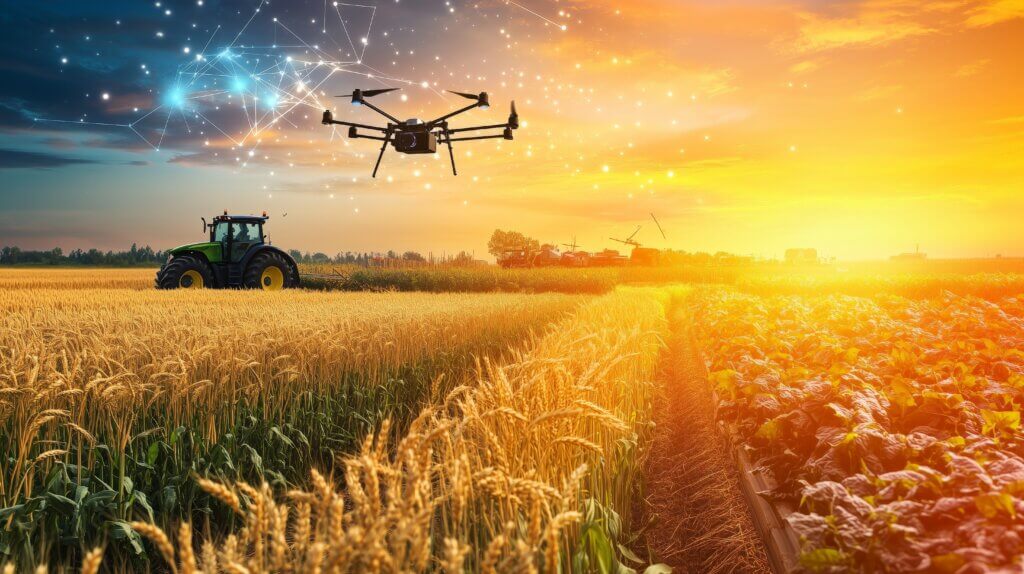
Joral’s non-contact sensors, rotary encoders, and inclinometers are engineered for the punishing environments of agriculture—exposure to mud, dust, vibration, and extreme temperatures. These sensors track rotary and linear motion, allowing control systems to adjust hydraulic valves, electric motors, or actuator positions with accuracy and reliability.
Because many farming operations run dawn to dusk (and often beyond), uptime and durability are paramount. Sensors like Joral’s Zero Power line offer position retention even when power is lost, ensuring no recalibration is needed after shutdowns or interruptions.
Our products support essential technologies in precision agriculture such as:
Sensors don’t just help machines operate, they’re the front line in data collection for modern agriculture. Every degree of rotation or millimeter of travel tracked by a sensor becomes part of a larger dataset that helps farmers make smarter decisions. When coupled with cloud platforms and telematics, this data drives predictive maintenance, optimizes machine routing, and even supports AI-driven crop management.
As the agriculture industry continues to adopt autonomous systems and electrified machinery, the importance of robust position measurement will only grow. Joral is committed to developing advanced sensor technologies that help OEMs and farmers alike build smarter machines that can work harder, last longer, and think for themselves.
In the high-tech world of precision agriculture, being off by an inch can mean the difference between success and setback. With Joral’s sensors and encoders, your equipment won’t just move, it will move with confidence.